
Before you judge
What Virginia Woolf Taught Me About My Own Bias

Each winter I mark my progress by my acceptance of the world around me and how easily I slip into a shrinking world created by terminal illness.
Today as my physical world recedes, my emotional world is expanding, promoting space for acceptance, forgiveness and understanding.
Last night was about acceptance. The worst night for fireworks and swearing this year. Thankfully the dogs seem to be more pragmatic, but with asbestosis I am much more susceptible to the slightest fleck of pollution and I am coughing more.
Maybe it is age. This month I turn into an old age pensioner, senior citizen they call them/us now. I can’t fathom how I’ve arrived at this, it being only a few sleeps ago I was sixteen and walking down Dead Man’s Hole Lane to begin work at British Steel, dad having told me I’d have a job for life. Of course being young nothing could touch me, the future stretched as far as I could think. Life was about girls and friends and trying to work out how to be a man. We were invincible and pushing to show our parents how living should be done. Being old or ill never entered the equation.
The government is saying this is going to be the worst flu season for ten years. The virus began its climb out of obscurity last month, a whole month or more sooner than usual and this year’s vaccine isn’t an exact match. We got the jab in October and at the beginning of November I went into my self-imposed isolation; barring the Boardman Tasker event later this month I won’t be venturing out until next April.
I like this period. Battening-Down-The-Hatches I call it: keep the house warm, eat well, take vitamin D and concentrate on reading, writing, relaxing, music and my family, Alison Olly and Scout. It’s become a season of reflection and hope for the near future. Our time horizon these days seems to be about one year though it can shrink significantly if my health takes a downturn, or stretch wildly if I am having a good day. With a progressive terminal illness nothing is ever the same,
I’ve put some weight back on. I’m sort of pleased. It means the disease is not ravishing me as quickly as before but clothes are becoming uncomfortable, the fabric doesn’t seem to have as much room in it as it used to, and I’m loath to buy new clothing as I can’t see myself getting much use out of it.
How much use will I get if I don’t have much longer to live is an important question especially around gifts. We have a spread sheet where we jot down the presents we’d like for birthdays and Christmas. Normally, this has been a big spend period for me, expensive gifts that may or may not be needed but fill the hole of want. My list this year is simple: a few books, a journal, a wool blanket (I feel the cold more now). These are items that don’t require a long-term future and can easily be recycled through charity shops.
In a way I’m pleased. It means I’ve stepped off the materialistic merry-go-round—though this morning I was looking at instant photo cameras, just something that had popped into my head—and I wonder if that is age, or fatalism, or growing up. Or I’m tired of the constant grind of a society built on consumption.
I think there is some aspect of all this connected to my shrinking world, maybe even a little apathy. I suspect, because my journal entries are shorter and lately days are empty, I have little to note. As day to day physical activity has diminished producing little to write about, the space created in my mind has been turning over thick wodges of the past, creating new challenges to my mental and emotional well-being.
I don’t want to spend my final days in regret, resentment or shame. Thankfully, the twelve step programme helps me to deal with regret and shame. Making amends for the harm I have done to others is a central tenet of the programme’s philosophy. Amends need to be made in the right way and with the right frame of mind. This is not about asking forgiveness, it is about a sincere apology and a reparation. The response of the offended to that is not in the hands of the offender and must not influence the process. It’s taking responsibility and learning to live with humility. I have no amends to make that I know of, my side of the street is brushed clean.
What the programme does not deal with is closure when repairing the damage of harm done to me by others. It’s what I have been working on this last year. It’s that wanting to have the last word, the killer final put down that I never got the chance to make. It always comes long after the event, isn’t that always the case, never in the actual moment. And so it lingers and grows, the hurt inflicted by someone. Perhaps I needed to grow up or grow another layer of skin. Maybe it’s in my head and it never actually happened.
I have achieved a resolution. It involves that backwards view of hindsight that is always in sharp focus. It involves acknowledging that someone’s transgression towards me, may have been an aberration, outside the standard deviation of their day to day personality. They may be dealing with things in their own life that lead them to try and boost their ego at the expense of others. So a little humility and understanding can save me a lot of angst.
I have a bias to take one unpleasant event and paint a person’s whole life with that one brush. That’s who they really are. The cruel remark, the sarcastic aside, the racist undertones, the snide allusions, whispers, cliques. It’s all there, the holes in the fabric of a normal day.
Reading widely has helped me gain a better perspective of a life well lived. Fiction and non fiction can help me see a world where I can fit in. It often transpires that the writer’s own life can be more enlightening than the words they place on a page.
When my reading takes me to a place I never expected, and I learn about me, I know synchronicity is at work. Here’s David Trotter in the London Review of Books drawing attention to one facet of Virginia Woolf. A writer whom I have adored for many years, and held as a measure to gauge myself against, always less than, always.
He is reviewing a ‘biography’ of Mrs Dalloway. Towards the end he shines a light on Woolf’s creation of Septimus Warren Smith, the shell-shocked war veteran character, and her own personality hidden within her diary.
Woolf and her husband are walking along the Thames towpath in 1915, buying a pineapple, a general air of disconnection with any trouble, she writes in her diary:
‘On the towpath we met and had to pass a long line of imbeciles. The first was a very tall young man, just queer enough to look twice at, but no more; the second shuffled, and looked aside; and then one realised that everyone in that long line was a miserable ineffective shuffling idiotic creature, with no forehead, or no chin, and an imbecile grin, or a wild suspicious stare. It was perfectly horrible. They should certainly be killed.’
These are personal private thoughts, but nonetheless, still shocking and to me repulsive, cruel and indecent. Do I now remove Woolf’s literature from my shelves? Do I view her work as tainted? She was in her early thirties, her experience of life limited to the rarefied air of her own family, Bloomsbury, a cloistered protected world. Certainly she was selfish and self-centred. Narcissistic? Perhaps, but at the time there was much talk of superior races, eugenics, the physical characteristics of class.
But Woolf could write and she helped other writers, through Hogarth Press for example. There were many, many other aspects of her life that would be unwelcoming in today’s society. And of course her own mental illness and suicide hints at a biased view of the world and her place within it.
My bias is to take that one diary entry and build the whole person around it. Those on the pedestal, friends even, can be jettisoned at a single divergence from the image I have built up of myself within their life. It fosters resentment and hatred, sleepless nights and a forgoing of pleasant days. The standard I hold people to is one I frequently fail to meet, making me a victim of my own petard.
I have worked on this. It is not forgiveness, for I am unsure there is anything I have to forgive people for, this is about me. Rather, I choose to accept someone as they are, as I ask people to accept myself. The result is that the resentments have fallen away and a peace, admittedly sometimes fragile, has settled upon my life that I am grateful for.
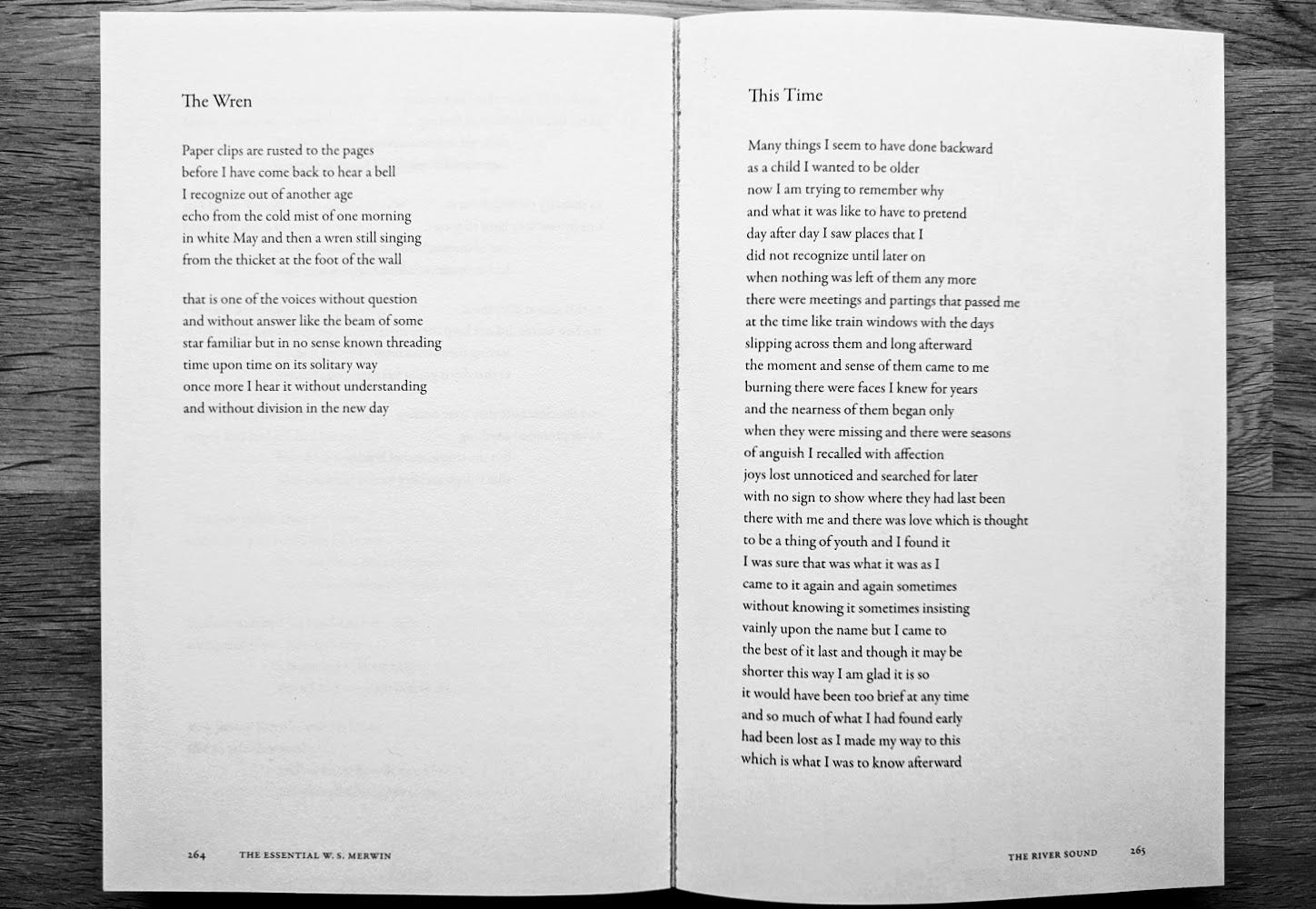
It has taken me a lifetime to reach a point where I can say, I and you both are human and all that that entails. I think W. S. Merwin said it rather well in his poem, ‘This Time’.
Do you, reading this, find it possible to separate people, artists, people in the public eye from their flaws? Or even, the person you once were from the one you are now?”
Take care and good luck
Paul
Do you know this one, Paul?
The Ideal
This is where I came from.
I passed this way.
This should not be shameful
Or hard to say.
A self is a self.
It is not a screen.
A person should respect
What he has been.
This is my past
Which I shall not discard.
This is the ideal.
This is hard.
- James Fenton
Thanks for writing this, Paul. 'I have a bias to take one unpleasant event and paint a person’s whole life with that one brush' - I have that bias too. I really like your take here. Forgiveness seems such a lofty thing, unattainable even. But what you have arrived at is brilliant, I think: 'I and you both are human and all that that entails.' Really helpful.