
The Things I Read

For me, one of the joys of reading is finding a reference in a book to something local to where I live. The older the book, the more removed from my locale and the subject I am reading the more removed, all the better. Often it shines a light on the words used locally, the ones that make no sense until you come across them in some totally unrelated writing.
It happened with Proust’s In Search of Lost Time—a reference to ‘Grains’ during a salon conversation—the word denoting swampy or marshy ground. This explained ‘Grains In The Water’ coming off Bleaklow into Alport Dale on the OS Dark Peak map. It always baffled me why it was called that. Perhaps it was a spelling mistake I thought. The Norman’s made much of the land in those parts and with the direction from Marcel, I am guessing that was the source. It is indeed marshy, swampy ground, my boots can attest to that.
I have been re-reading Walden by Henry David Thoreau (part of The Honest Broker Humanities Reading Programme). Last night I read the chapter, ‘The Ponds’, where Walden rails against the disturbance from the nearby rail-road and passing trains;
‘That devilish Iron Horse, who’s ear rending neigh is heard throughout the town [Concorde], has muddied the Boiling Spring with his foot, and he it is that has browsed off all the woods on Walden shore, that Trojan horse, with a thousand men in his belly, introduced by mercenary Greeks! Where is the country’s champion, the Moore of Moore Hall, to meet him at the Deep Cut and thrust an avenging lance between the ribs of the bloated pest.’
There is a great deal packed into this short passage. The Iron Horse - the steam engine, taking wood and water from the shore of the pond. The Trojan Horse of Aeneid hiding Greek mercenaries. Then the bit that peeked my interest, Moore of Moore Hall thrusting an avenging lance.
The latter a reference to Trojan, Laocoön, who threw his lance at the side of the horse in an attempt to warn his fellows of the danger within. This is Thoreau warning of the destruction to life that the rail-road and its thousand passengers will bring.
But what of Moore Hall? It is a reference to the poem Dragon of Wantley, in Bishop Percy’s book Reliques of Ancient Poetry (1765).
But More of More-Hall, with nothing at all,
He slew the dragon of Wantley.
The poem refers to a 17th century ballad about the local menace, the dragon, who lived in a cave in Wharncliffe Crags dining on locals, slain by the knight Moore of Moore Hall, who gets the local maiden as reward.
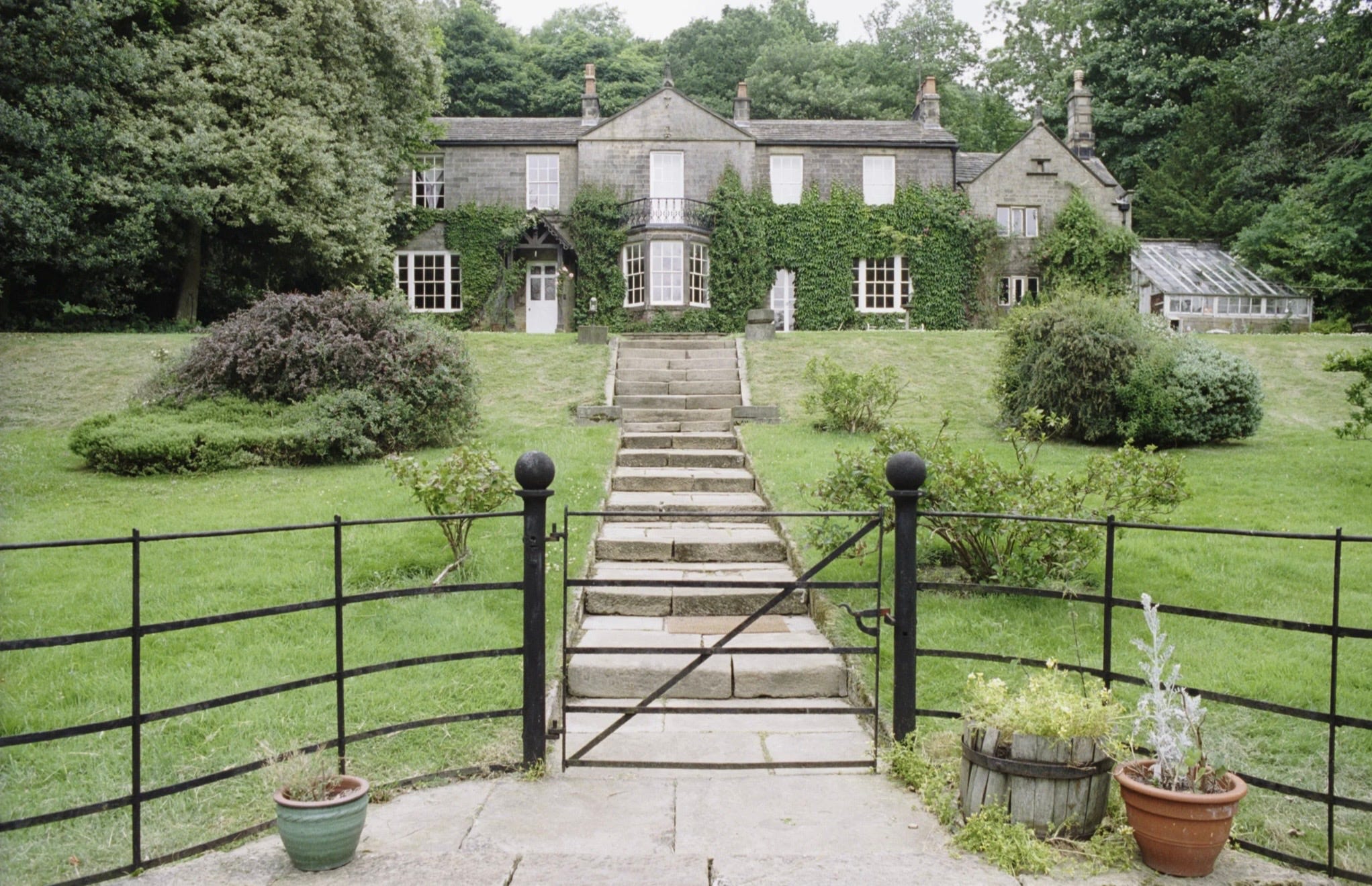
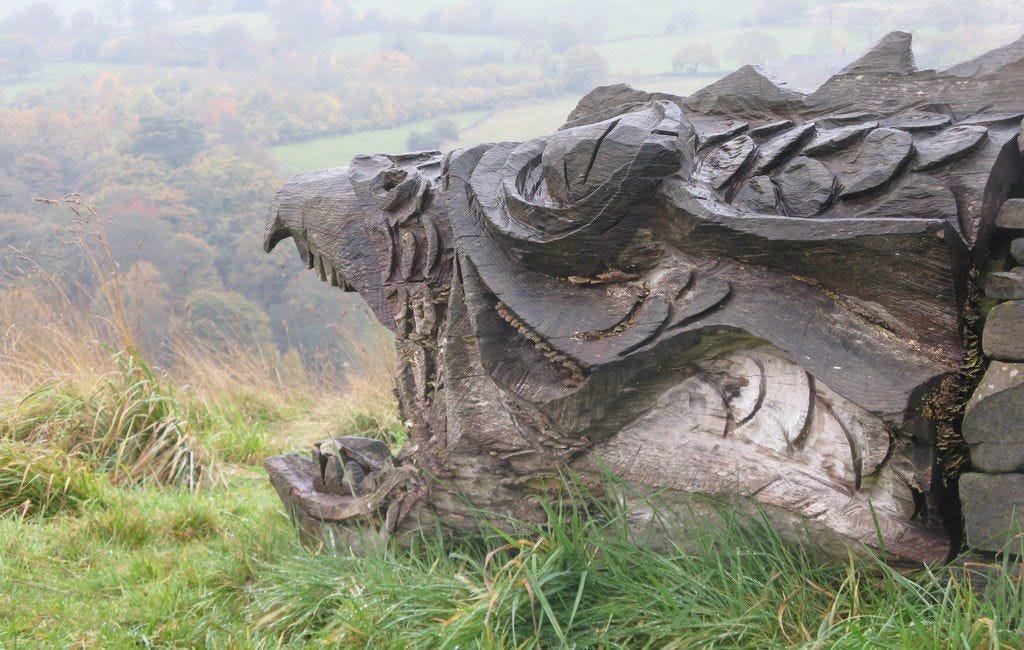
More Hall still stands a couple of miles from home, in the north west of the city, near Wharncliffe (formerly, Wantley). The cave is still there, hard to find unless you have a Mountain Rescue Search Dog, and these days full of empty beer cans. The dragon lives on in a beautiful sculpture situated above More Hall, with a seat close buy and a wonderful view down the valley to the city.
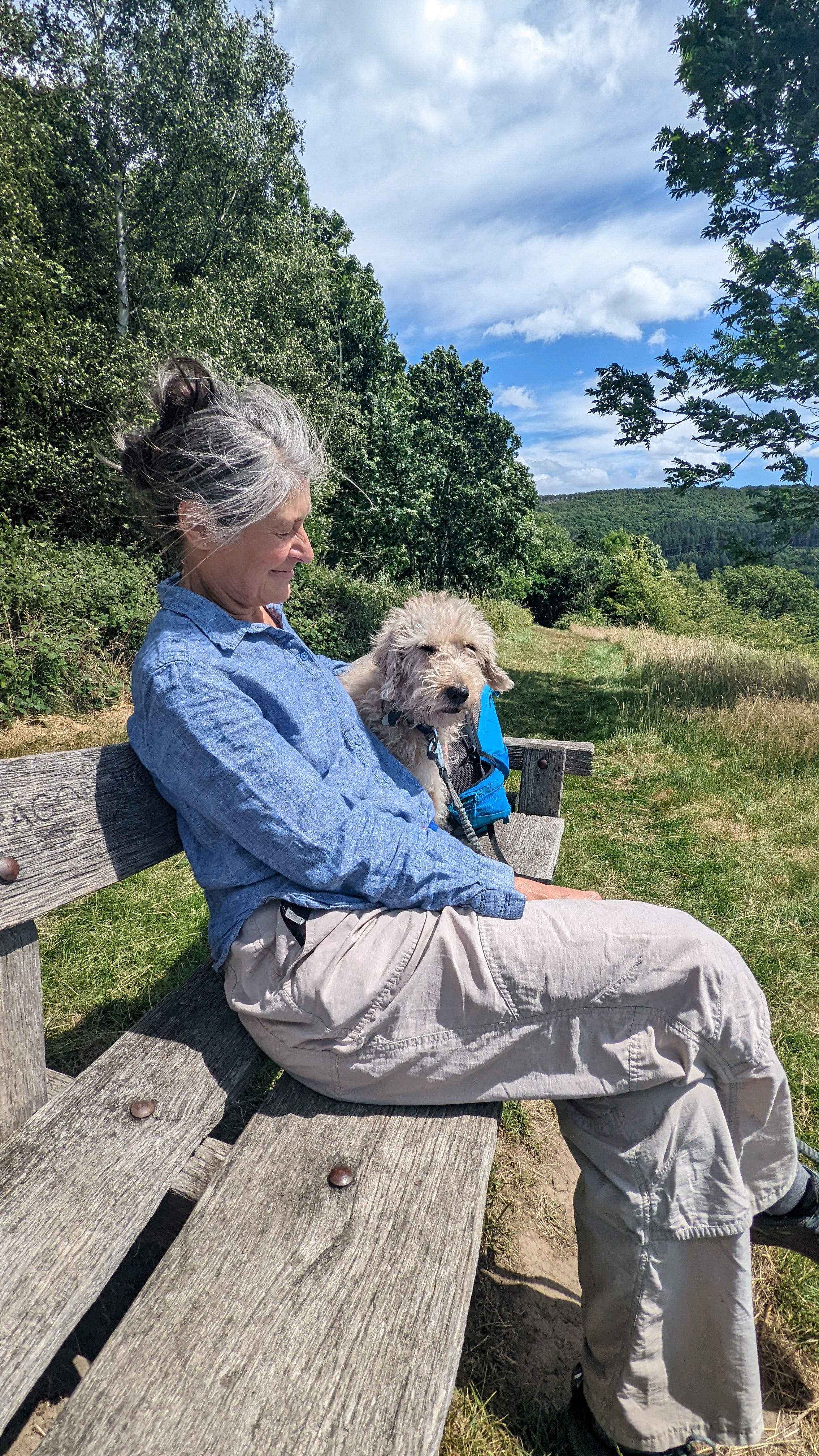
Photos: More Hall from Historic England website. The Wantley Dragon from Atlas Obscurer website. Alison and Monty sat on the Dragon’s bench.
Thank you for the Grains in the Water explanation, I’ve often wondered!